.png)
10 Mistakes to Avoid When Booking Your First River Cruise

Booking your first river cruise should be exciting. But once you actually start looking, it can get confusing pretty quickly.
Which river? Which cruise line? French balcony or actual balcony? Is one itinerary really that different from another? Do you need the pre-cruise land package? And why does one cruise cost thousands more when, at first glance, they seem almost identical?
I spend a lot of time answering exactly these questions.
I've sailed many river cruises myself, and I work with first-time river cruisers all the time. What I've learned is that people rarely come home wishing they'd studied the brochure more carefully. When they have regrets, they're usually about a few decisions they made before the trip.
So if you're planning your first river cruise, these are the mistakes I would avoid.

1. Choosing a river cruise by the list of ports
This is probably the easiest mistake to make.
You look at two itineraries, count the stops and think the one visiting more places must be better.
Not necessarily.
Two seven-night river cruises can look similar on paper and feel completely different once you're there.
One might be very city-heavy, with long sightseeing days and a lot of structured touring. Another might mix cities with small towns, scenic sailing and enough free time to wander around on your own.
Personally, I don't think more stops automatically make a better river cruise.
Some of my favorite river cruise days have involved doing less, not more. Sailing through a beautiful stretch of river, walking off the ship into a little town, or sitting somewhere with a glass of wine instead of rushing to the next thing.
When comparing river cruise itineraries, don't just ask, "Where does it go?"
Look at how long you're actually in each place, how much sailing happens during the day, what the excursions look like and whether there is any free time.
Most importantly, ask yourself whether that's how you like to travel.
You're not collecting ports. You're taking a vacation.
2. Assuming all river cruise lines are basically the same
They're really not.
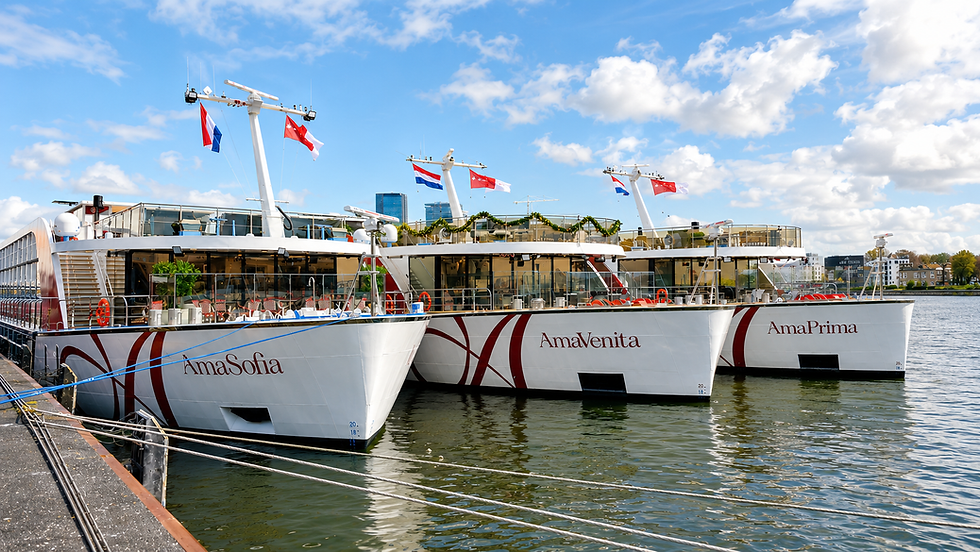
From the outside, river ships can look remarkably similar. They have to fit through the same locks and under the same bridges, so there are limits to what cruise lines can do with the ships themselves.
River cruise lines can be very different in the things that actually affect your trip: the size and layout of the cabins, what's included, the food, the excursions, the number of guests, the atmosphere onboard and even how much choice you have each day.
And this is where I think people get too focused on finding the "best" river cruise line.
I don't think there is one.
I've sailed with several river cruise lines, and there are things I really like about each of them. But I wouldn't recommend the same one to every traveler.
Someone who wants a very inclusive luxury experience may be happiest on one line. Someone who loves having several excursion choices and different activity levels may prefer another. And someone who cares most about having the largest possible cabin for the money may make a completely different choice.
Even the things that sound similar in a brochure aren't always similar once you're onboard.
"Excursions included" doesn't tell you how many choices you'll have.
"Balcony cabin" doesn't tell you what kind of balcony it is.
"All-inclusive" doesn't necessarily mean the same thing from one cruise line to another.
So don't choose your first river cruise based only on the prettiest ship photos or the cruise line you've heard of most often.
Start with how you like to travel, then find the cruise line that fits you.
That's a much better question than asking which river cruise line is the best.
3. Paying more for a cabin before understanding what you're actually buying
A higher cabin category doesn't automatically mean you're getting something you'll value more.
This is one of the areas where river cruising gets confusing very quickly. You'll see terms like French balcony, panoramic window, step-out balcony, twin balcony, veranda and suite, and those terms don't always mean exactly the same thing from one cruise line to another.
I've stayed in different types of river cruise cabins, and I don't think everyone needs to spend more for a balcony.
A French balcony, for example, usually gives you a floor-to-ceiling door or window that opens, but you don't actually step outside. A true step-out balcony gives you outdoor space, but that space has to come from somewhere, and on some ships it reduces the usable space inside the cabin.
Then there are ships with completely different designs.
That's why I pay much more attention to the actual cabin layout and square footage than to the category name.
Before paying for an upgrade, ask yourself what you're actually getting for the extra money.
More space? A better location? A true outdoor balcony? A larger bathroom? A better view?
And then ask the more important question: Will I actually use it?
Sometimes the upgrade is absolutely worth it. Sometimes I'd rather put that money toward a few extra days in Europe.
There is no universally "best" cabin. There is a cabin that makes sense for how you travel and what you want to spend.
4. Thinking a river cruise means very little walking
This is one I really want first-time river cruisers to understand.
River cruising makes traveling through Europe much easier logistically. You're not constantly packing, changing hotels or dragging luggage through train stations.
But once you get off the ship, you're still in Europe.
That means cobblestones. Stairs. Hills. Uneven streets. Historic buildings. And sometimes quite a bit of walking.
Many river cruise lines offer different walking groups or excursion choices, and that can help tremendously. But if mobility is a concern, this is something I would investigate before booking.
And don't just ask whether the ship has an elevator.
The elevator isn't going to help you on a cobblestone street in an old European town.
You need to consider the whole itinerary and the excursions, not just the ship.
5. Flying in the day your river cruise starts
Please don't.
Technically, can you take an overnight flight, land in Europe in the morning and board your river cruise that afternoon?
Yes.
Would I recommend it?
Absolutely not.
Flights get delayed. Connections get missed. Luggage doesn't always arrive when you do. And unlike a hotel, your river cruise ship is going somewhere.
If you miss embarkation, catching up with the ship may be much more complicated than simply taking a taxi to the next port. Depending on the itinerary, the ship may be hours away by the time you arrive, or it may already be sailing toward another country.
Even when everything goes perfectly, you've just spent the night on an airplane. Do you really want the first day of a trip you've spent thousands of dollars on to be a battle against jet lag?
I almost always recommend arriving at least one day before your river cruise. Personally, I prefer two or three when the schedule allows.
It gives you a cushion if something goes wrong, but it also gives you time to adjust, enjoy the embarkation city and actually be excited when you board instead of exhausted.
Yes, it means paying for another hotel night.
I consider that cheap insurance compared with trying to catch a river cruise ship that's already left without you.
6. Picking your river cruise date without thinking about the season
I get asked about the "best time for a river cruise" all the time.
My answer is always some version of: best for what?
There really isn't one perfect month for river cruising.
If you love warm weather and long daylight hours, summer may be exactly what you want. If you don't do well with heat and crowds, I would probably steer you toward another time of year.
Spring can be beautiful. Fall is one of my favorite times for sightseeing. And Christmas market cruises are their own experience entirely, with colder weather but a completely different atmosphere.
But weather and crowds aren't the only things I think about when choosing a river cruise date.

River levels matter too.
Both high and low water can affect river cruises. When water is too low, a ship may not have enough clearance beneath the keel to safely sail certain stretches of a river. When water is too high, the problem can be getting underneath bridges or through other parts of the river safely.
Either situation can result in itinerary changes.
Does that mean you should avoid a particular month because someone tells you that's when low water or high water happens?
No.
This is where I think there's a lot of bad advice about river cruising.
Can anyone tell you in January exactly what the Rhine or Danube will be doing in August?
No.
And I'd be suspicious of anyone who pretends they can.
I've seen river conditions change remarkably quickly. That's simply part of traveling on a river.
River cruising involves rivers. Nature gets a vote.
So I wouldn't choose my sailing date based on trying to predict water levels months in advance.
I would choose based on the experience I want: the temperatures I'm comfortable with, crowds, daylight, scenery, seasonal events and where I'm actually going.
Then I would go into the trip understanding that river cruising is different from an ocean cruise. The river is part of the experience, and occasionally, it gets to change the plans.
7. Not looking at the actual excursions before booking
This one gets overlooked all the time.
People spend hours comparing ships and cabins and barely look at what they'll actually be doing every day.
On a river cruise, that's backwards.
You're going to spend a significant part of the trip off the ship, and the excursion program can have a huge impact on how the cruise actually feels.
Cruise lines handle excursions very differently. On the same morning, one may give you several choices while another may offer one main included tour. Some divide walking tours by pace. Some have hiking and biking options. Some put much more emphasis on food, wine, history or special-access experiences.
And I wouldn't just count how many excursions are listed.
I look at what they actually are.
If you're fascinated by WWII history, Jewish heritage, wine, castles, food, art or cycling, look for those experiences before you book. Don't assume they'll be offered simply because your cruise visits the right destination.
I also look at how much time the excursions leave you to explore independently.
Personally, I don't always want to spend four hours following a guide. Sometimes I'd rather have a good introduction to a town and then wander off on my own, find a café, shop or just see where I end up.
That's part of river cruising too.
The ship matters. The cabin matters.
But when I'm comparing two river cruises for a client, I also want to know what their days are actually going to look like once they walk off that ship.
That can be the difference between an itinerary that looks good on paper and a trip they absolutely love.
8. Feeling like you have to take every included excursion
I understand the temptation.
The excursion is included. You paid for it. Therefore, you should go.
Nope.
You are allowed to sleep late.
You are allowed to walk into town by yourself.
You are allowed to sit on the Sun Deck while everyone else goes sightseeing.

You are even allowed to find a café, order something delicious and accomplish absolutely nothing for two hours.
In fact, I recommend it.
River cruises can become surprisingly busy if you let them. Morning tour, lunch, afternoon excursion, cocktail hour, dinner, evening entertainment...and suddenly you need a vacation from your vacation.
Don't turn your river cruise into a checklist.
Take the excursions you're excited about. Skip one when you're tired. Wander into town on your own when you feel like it.
You paid for a vacation, not perfect attendance.
Some of my favorite travel moments have happened when absolutely nothing was on the schedule.
9. Packing way too much
You probably don't need half of what you're considering bringing.
River cruises are generally more relaxed than first-time cruisers expect.
During the day, you're sightseeing. In the evening, people clean up for dinner, but on most river cruises this isn't the place for a suitcase full of formalwear.
I care much more about what you're putting on your feet.
Bring comfortable shoes that you've already worn for long periods of time.
Not the brand-new pair you bought because the salesperson promised they were comfortable.
Your old, trusted, walked-five-miles-and-didn't-hate-life shoes.
Add layers, something for rain and a practical day bag, and you're already ahead of the game.
10. Choosing the cheapest river cruise instead of the best value
This is where comparison shopping gets tricky.
Two river cruises can have very different prices and still not be an apples-to-apples comparison.
What's included?
Which excursions?
Drinks?
Transfers?
Gratuities?
Wi-Fi?
Special events?
Pre- or post-cruise stays?
And what cabin are you actually comparing?
Promotions matter too. A cruise that looks expensive today can suddenly become a much better value when a promotion includes land, an upgrade or substantial savings.
I see this constantly when I'm comparing sailings for clients.
Sometimes spending a little more gets you a significantly better trip.
And sometimes I tell someone not to spend more because I genuinely don't think the upgrade is worth the money.
The goal isn't to find the cheapest river cruise.
It's to figure out where your money will actually make a difference to your trip.
One More Thing: Don't Leave Travel Insurance Until the Last Minute
I know. That's technically eleven.
But I couldn't leave this one out.
Travel insurance is something I think you should consider early, not a week before you're leaving.
Policies vary significantly, and certain benefits or eligibility requirements can depend on when you purchase coverage. Read the actual policy and understand what is and isn't covered.
You may decide on comprehensive coverage. You may decide on something different.
But make that decision while you still have choices.
What I Would Focus on When Booking Your First River Cruise
After all of that, here's what I think matters most.
Don't obsess over finding the "best" river cruise.
Find the right itinerary, the right pace, the right cruise line, and a cabin you'll actually be happy with, at a price that makes sense for the experience you're getting.
That's really it.
One of the reasons I love river cruising is that once you're onboard, travel becomes remarkably easy. You unpack once. The scenery changes outside your window. You walk off the ship and you're somewhere new.
But getting that experience right starts with choosing the right cruise in the first place.
And that's worth spending some time on.
Planning Your First River Cruise?
If you're not sure which river, cruise line, itinerary or cabin makes the most sense for you, I'd be happy to help.


Comments